Can You Really Take Fewer GLP-1 Shots and Still Keep the Weight Off? New Research Says Yes — But There’s a Catch

Amanda was terrified.
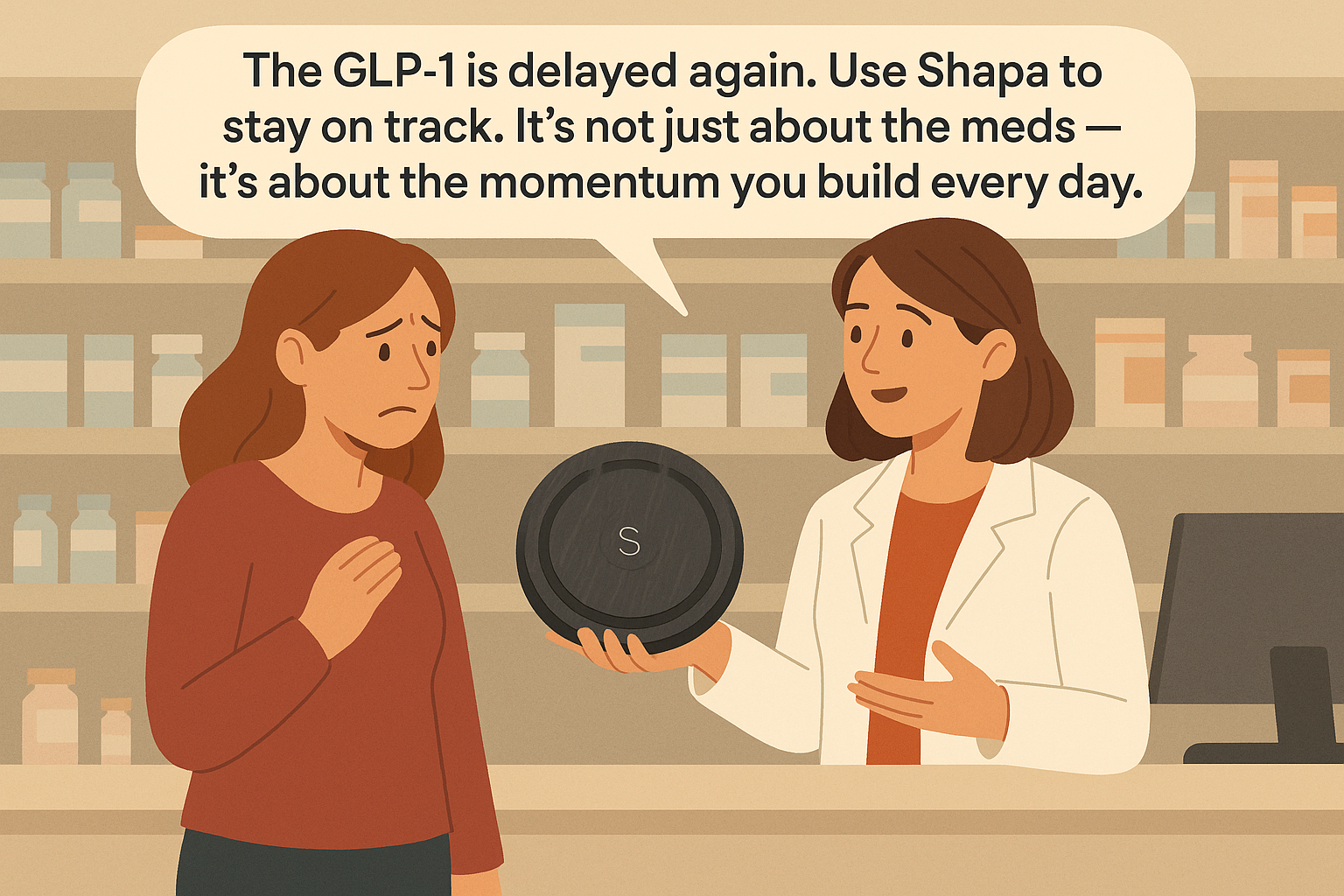
Her pharmacy had just told her the next refill of her GLP-1 medication — the one that helped her lose 38 pounds and regain her energy after years of battling insulin resistance — was delayed. Again.
This was the third time in two months. The thought of going without made her stomach twist. “I finally felt like I was winning,” she told us. “Now it felt like the rug was being pulled out from under me.”
But here’s what Amanda didn’t know yet — and what a new study from researchers Calvin Wu, Anıl Cengiz, and Sean Lawley has just made clear:
You might not need to take your GLP-1 medication as often as you think.
In fact, less frequent dosing may still help you maintain significant weight loss — as long as you have the right behaviors and tools to back you up.
And that’s where Shapa — the personalized, no-scale-number, behavior-focused weight management platform — changes the game.
Let’s unpack this. Because it’s a story worth telling. And you might be living it, too.
The Myth of “More Is Better”
You’ve seen the headlines. Semaglutide. Tirzepatide. Ozempic. Wegovy. Mounjaro. They’ve been hailed as miracle drugs, capable of slashing body weight by 15%, 20%, sometimes more.
And the hype is real — these medications do help reduce appetite, normalize blood sugar, and rewire the hunger response. But they also come with baggage:
- Costing over $1,000 a month
- Hard-to-access prescriptions due to supply shortages
- Side effects and fear of regaining weight after stopping
So people do what humans do when faced with uncertainty and scarcity: they get creative.
And two patients in this new study did just that.
Two Real People, One Unlikely Strategy
Case #1: A man in his 30s started semaglutide after years of struggling with his weight, despite walking daily and trying intermittent fasting. At 285 pounds, he needed a change.
The medication helped. He dropped 40 pounds. But then came pharmacy shortages. Life stress. A period of four months without medication. Somehow, he didn’t spiral. Instead, he began spacing out his doses, injecting every 10 to 14 days instead of weekly — and used that time to double down on habits: walking more, cooking at home, managing stress.
By the time the study closed, he had lost over 70 pounds total and was confidently maintaining his weight at 210.
“I realized I didn’t need it every single week,” he said. “I just needed to keep doing what was working outside the shot.”
Case #2: A woman in her 50s with uncontrolled diabetes and obesity started on semaglutide, then switched to tirzepatide. She went from 180 to 126 pounds — and came off insulin for the first time in 15 years.
Then the shortages hit. She couldn’t get the meds for weeks. But thanks to reduced-carb eating, mindful portions, and habit momentum, she maintained her new weight — even while dosing only occasionally.
Sound like a fluke?
The researchers didn’t think so either. So they built a mathematical model to simulate weight changes in virtual patients. The results were striking:
Even when patients cut their dose frequency by 50%, they kept up to 72–90% of their weight loss.
Let that sink in.
Half the dosing.
Most of the benefits.
Shapa: Your Behavioral “Booster” Shot
If GLP-1s are the ignition switch, Shapa is the steering wheel, the GPS, and the fuel efficiency system.
It was designed by behavioral scientists to help people make real, lasting changes in their health — changes rooted in psychology, not perfection.
Here’s how Shapa makes dose reduction actually work:
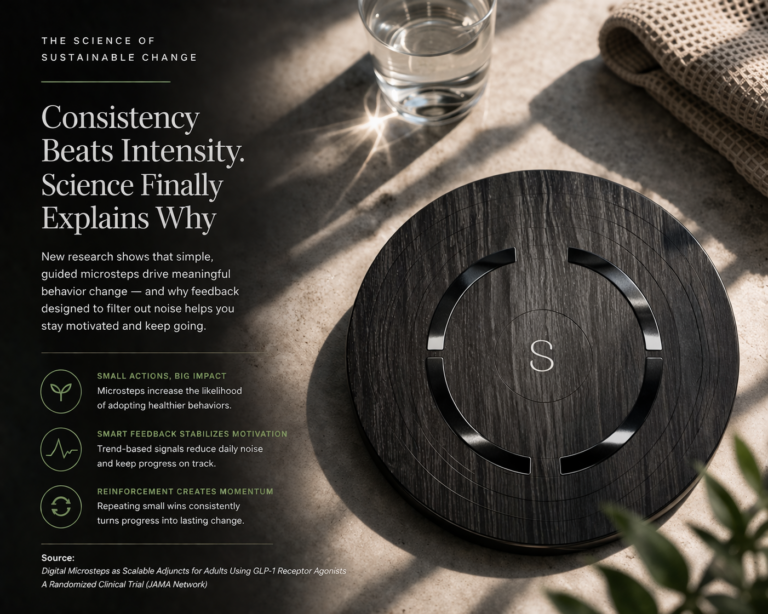
Color-Feedback System (Not Shame Triggers)
You step on your Shapa Numberless Scale® every day, but it never shows a number. Just a color — a smart, intuitive trend that reflects your long-term progress. You’re not defined by yesterday’s burrito.
Personalized Missions
Shapa gives you tailored behavior goals (we call them Missions) based on your habits, lifestyle, and progress. They’re bite-sized, sustainable, and completely customizable.
Data-Driven Support
Want to know if you’re maintaining after cutting your dose in half? Shapa tracks your progress without the emotional rollercoaster of a digital scale. It’s insight, not anxiety.
Built for Lifelong Change
Our platform helps you build routines and mindsets that last long after the weekly shots are gone. In a world of quick fixes, Shapa plays the long game.Shapa: Your Behavioral “Booster” Shot
If GLP-1s are the ignition switch, Shapa is the steering wheel, the GPS, and the fuel efficiency system.
It was designed by behavioral scientists to help people make real, lasting changes in their health — changes rooted in psychology, not perfection.
The Truth About Maintenance
Let’s be real: maintaining weight loss is often harder than losing it.
Once the external motivators fade — the rapid results, the praise, the new wardrobe — we’re left with habits. That’s when it gets real.
Reduced-dose GLP-1s may help you stretch results biochemically, but Shapa helps you stretch results behaviorally.
It gives people like Amanda a lifeline: not just another prescription, but a system that reinforces what really matters — the small, daily wins that add up to a lifetime of health.
This Isn’t Just Science — It’s Freedom
If you’ve ever felt trapped by the thought of being on GLP-1s forever… you’re not alone.
This study offers hope. A new path. A chance to take back control. And Shapa is here to walk with you.
Because weight loss is never just about food or meds or willpower. It’s about changing who you believe you are. One informed, empowered step at a time.
TL;DR — Your New Roadmap
- GLP-1 medications work — even at lower, less frequent doses.
- Real people have done it — with the help of lifestyle changes and structured habits.
- Shapa helps you make those habits stick, with data, coaching, and compassion.
- You don’t need to stay on weekly injections forever to maintain your progress. But you do need a system that supports you when the meds step back.