Macrodosing GLP-1s: Could Higher Doses of Semaglutide Finally Rival Tirzepatide?

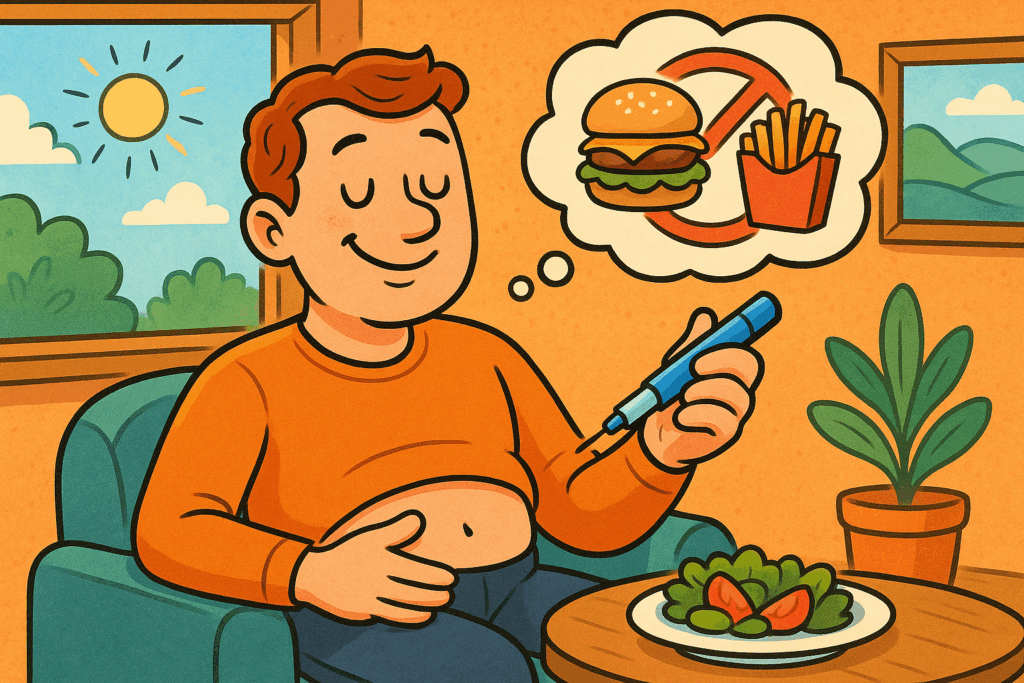
For decades, patients with obesity have described the same experience. It feels like there is an invisible wall. They can diet, exercise, journal calories, cut carbs, and count points. Some see progress, but most eventually stall. The wall does not budge. The frustration builds. Too often, both patient and clinician are left staring at each other, knowing the biology is stacked against them.
Then GLP-1s arrived, and the wall finally cracked.
Once-weekly semaglutide at 2.4 mg transformed the conversation. Patients began losing meaningful amounts of weight. Cardiometabolic markers improved. Hope returned. For clinicians, it became one of the first tools that reliably shifted physiology in a way lifestyle interventions alone rarely could.
But science does not stand still.
The recent STEP UP trial tested a higher dose of semaglutide, 7.2 mg compared to the standard 2.4 mg.
The results deserve our attention.
Over 72 weeks in more than 1,400 adults without diabetes, the higher dose achieved about 3 percent more weight loss. That may sound modest, but for patients who have struggled for years, that margin often separates “better” from “life-changing.” The average additional loss at 7.2 mg approached the efficacy seen with tirzepatide in the SURMOUNT program, where 10 mg and 15 mg doses produced 20.9 percent and 22.5 percent weight loss respectively compared to 2.4 mg semaglutide in STEP 1 at about 14.9 percent. Semaglutide at 7.2 mg does not quite reach tirzepatide’s range, but the gap is narrowing in a meaningful way.
What surprised many was not only the efficacy but the side effect profile.
Gastrointestinal issues were more common at 7.2 mg, affecting 70.8 percent compared to 61.2 percent at 2.4 mg, yet most were mild and self-limited. The unexpected finding was dysaesthesia. Tingling, burning, and skin sensitivity appeared in nearly one quarter of patients on the higher dose compared to just 6 percent on the standard dose. Most cases resolved quickly, particularly after the dose increase, and only four patients discontinued. Still, it was a reminder that obesity treatment is never simple.
Here is the key takeaway.
GLP-1s, whether standard dosing or macrodosing, can break down the wall. But what patients do once they are on the other side depends on the support and tools we give them to stay on course.
Even with pharmacologic support, patients need tools to understand progress beyond the number on the scale. They need reinforcement when weight fluctuates or plateaus. They need encouragement when side effects make them question whether to continue. They need support when mental health collides with physical progress.
This is where Shapa becomes an essential partner.
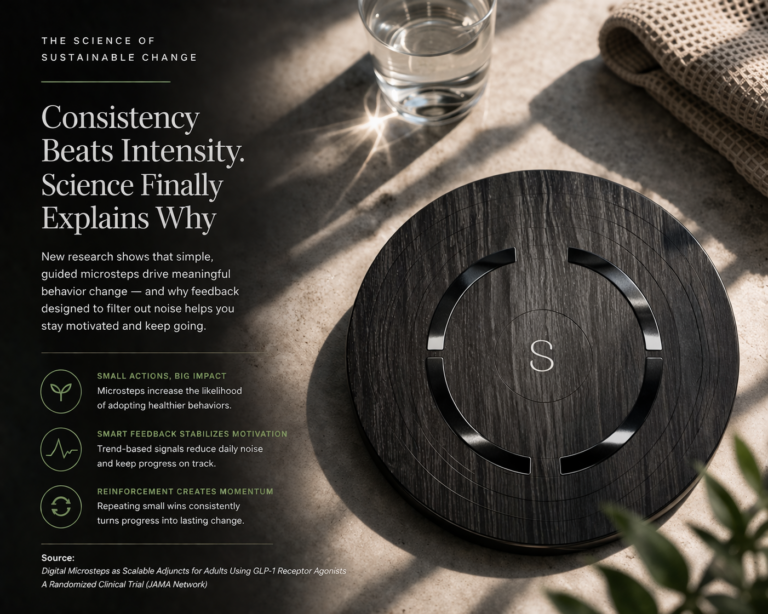
Shapa’s Numberless® scale removes the noise of traditional scales and reframes how patients see progress. Instead of a daily number that swings up and down and fuels discouragement, the Numberless® scale provides color-based feedback that reflects longer-term trends. Patients are no longer trapped by a single digit but are instead guided by consistent progress markers that align with their behaviors and health goals.
For clinicians, Shapa offers more than just a device.
It creates a behavioral framework that pairs seamlessly with pharmacologic therapy. While semaglutide or tirzepatide adjust physiology, the Numberless® scale helps sustain engagement, builds resilience through plateaus, and reinforces adherence over the long term. It is the bridge between biology and behavior.
Macrodosing semaglutide may bring us closer to tirzepatide-level efficacy. It may allow patients who have struggled for decades to finally achieve weight loss at a magnitude they never thought possible. But trial efficacy is only the beginning. Sustainability is the true frontier.
GLP-1s and tools like the Shapa Numberless® scale are not competitors. They are complements. One breaks the wall. The other ensures patients keep moving forward once it is gone.
As we enter this next chapter in obesity care, clinicians have both the responsibility and the opportunity to merge pharmacology with behavioral science. That is how we shift from temporary wins to lasting change.