Why Redefining Obesity Could Change the Way We Measure Health


For years, Body Mass Index (BMI) has been treated as the universal measure of health. A simple calculation that places people into neat categories of “normal,” “overweight,” or “obese.” But a new study published in JAMA Network Open suggests that this metric may be leaving millions misclassified.
Researchers found that nearly 70% of U.S. adults would be deemed to have obesity under a new definition; one that moves beyond BMI and takes into account how body fat is distributed and whether there are signs of metabolic dysfunction.
The traditional BMI-based approach has long been criticized for its inability to differentiate between fat and muscle, and for ignoring factors such as body composition and waist-to-hip ratio. “Recognising people with [this type of] obesity can lead to more accurate health risk stratification,” said Dr Lindsay Fourman, the study’s first author from Mass General Brigham in the US, told The Guardian. “For example, someone with BMI 23 but excess abdominal fat could benefit from lifestyle interventions such as improving diet and increasing physical activity, even though their BMI is in the ‘normal’ range.”
Under the new criteria, individuals could be categorized as having obesity if they meet one of several conditions: a BMI greater than 40; a high BMI with at least one elevated measure such as waist circumference or waist-to-hip ratio; two elevated measures regardless of BMI; or direct evidence of excess body fat on scans. The definition also proposes two categories of obesity: clinical and pre-clinical, depending on whether there are signs of illness.
When researchers applied this definition to data from more than 300,000 U.S. adults, the proportion classified as having obesity increased from 43% under the traditional BMI standard to 69% under the new approach. According to Fourman, this broader classification aligns with observed associations between higher body fat levels, organ function, and long-term health outcomes.
Experts agree this shift could be meaningful, but it also underscores a deeper issue: health cannot be reduced to a single number.
As Professor Naveed Sattar of the University of Glasgow noted, “Regardless of definitions, it’s clear that current obesity levels pose major challenges … with rising weight levels underscoring the urgent need for more effective strategies to support healthier living.”
That’s exactly where Shapa® comes in.
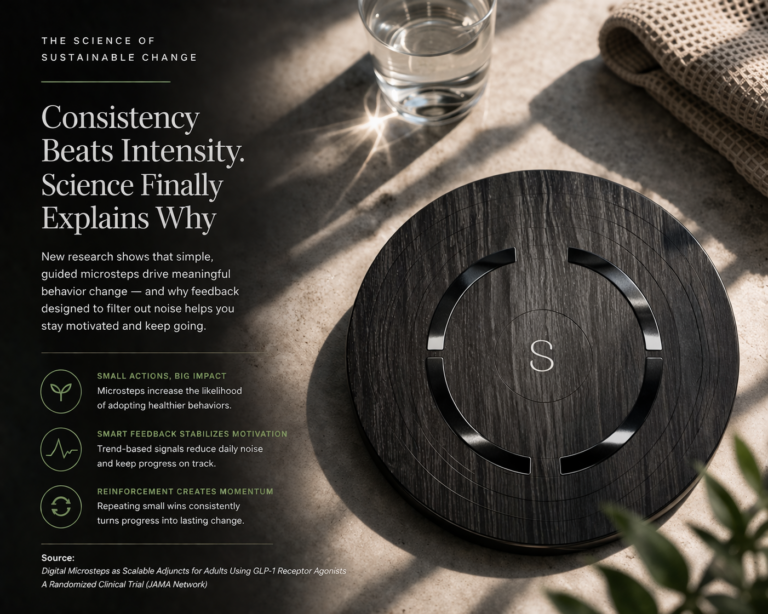
The Shapa Numberless Scale® was built around the idea that real health progress isn’t measured by a single number. Traditional scales reinforce the same problem as BMI; an overreliance on a narrow, often misleading metric. Shapa instead focuses on long-term behavioral trends and daily habits that shape overall well-being.
By replacing numbers with color-based feedback, Shapa helps users shift their focus from daily fluctuations to meaningful progress. Its habit-building “missions” are designed to reinforce the small, sustainable actions that improve metabolic health over time; the very kinds of lifestyle changes that researchers like Fourman highlight as crucial interventions.
This evolving understanding of obesity, and health more broadly, is a reminder that wellness is multidimensional. It’s about energy balance, activity, sleep, stress, and consistency, not just weight. And while researchers continue to refine how we define obesity, tools like Shapa are helping people redefine what it means to be healthy.
Because true progress isn’t about chasing a number. It’s about building habits that last.